Policy Brief 1 ·
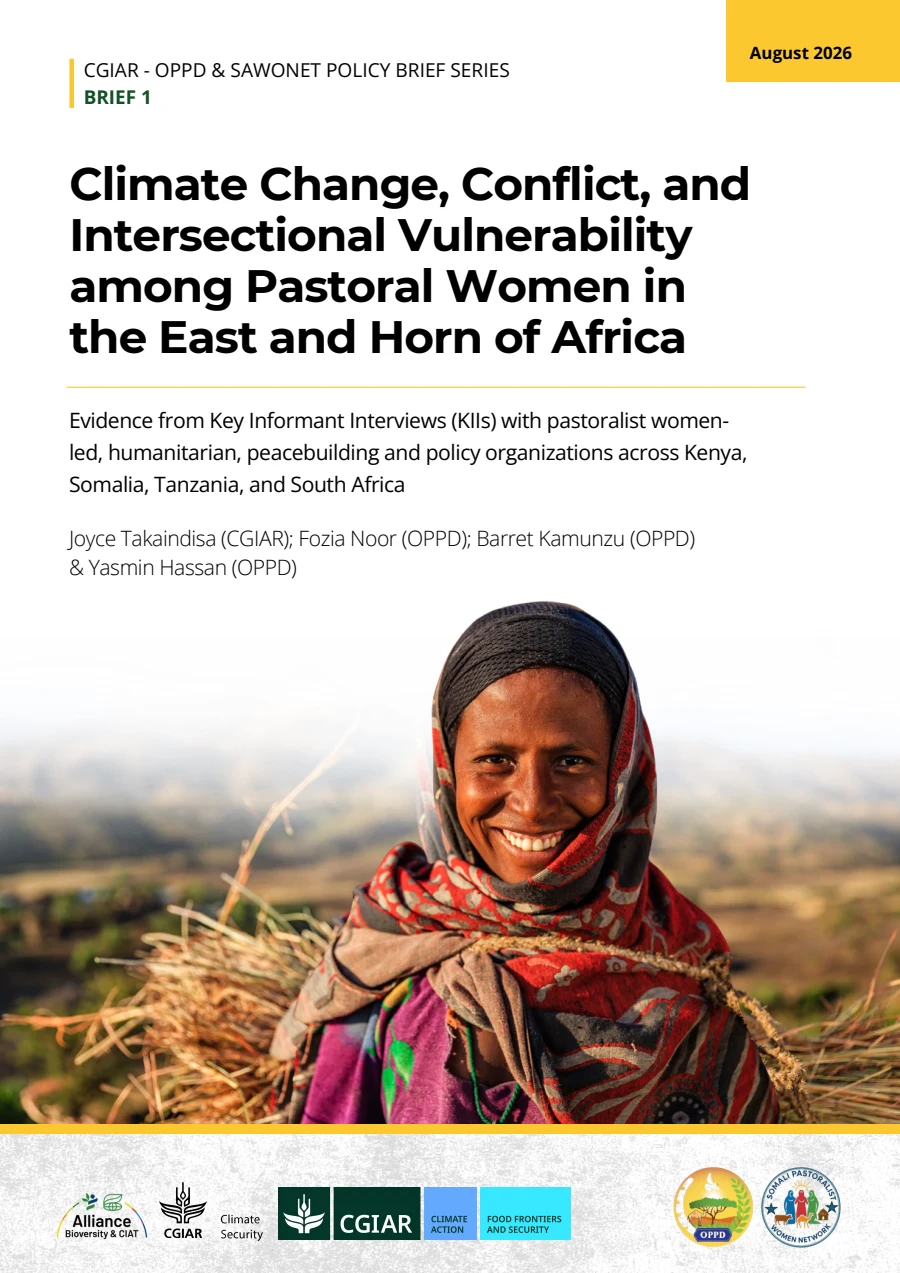
Climate Change, Conflict, and Intersectional Vulnerability among Pastoral Women in the East and Horn of Africa
Evidence from Key Informant Interviews (KIIs) with pastoralist women-led, humanitarian, peacebuilding and policy organizations across Kenya, Somalia, Tanzania, and South Africa
- Authors
- Joyce Takaindisa (CGIAR); Fozia Noor (OPPD); Barret Kamunzu (OPPD); Yasmin Hassan (OPPD)
- Series
- CGIAR, OPPD & SAWONET Policy Brief Series
- Research countries
- Kenya, Somalia, Tanzania, South Africa
- Publication
- August 2026 · Brief 1
- Format
- PDF · 23 pages · 11.9 MB
Executive summary
Drawing on key informant interviews with 20 organizations across Kenya, Somalia, Tanzania and South Africa, this brief examines how climate pressures reshape livelihoods, mobility and gender relations. Women increasingly manage household and community survival without equivalent gains in rights, assets or authority. The brief recognizes their existing adaptation, peacebuilding and ecological knowledge, while arguing for institutional support that addresses intersecting forms of exclusion.
Condensed from the original brief. Read the PDF for the complete evidence, analysis and references.
Key findings
- Drought, flooding and livestock losses undermine income, food security and the informal support systems on which pastoral households depend.
- Women take on additional care, livelihood and household responsibilities as men migrate, without corresponding control over land, livestock, finance or decisions.
- Competition over water, pasture and grazing corridors intensifies existing tensions; climate change acts as a threat multiplier alongside political and institutional vulnerabilities.
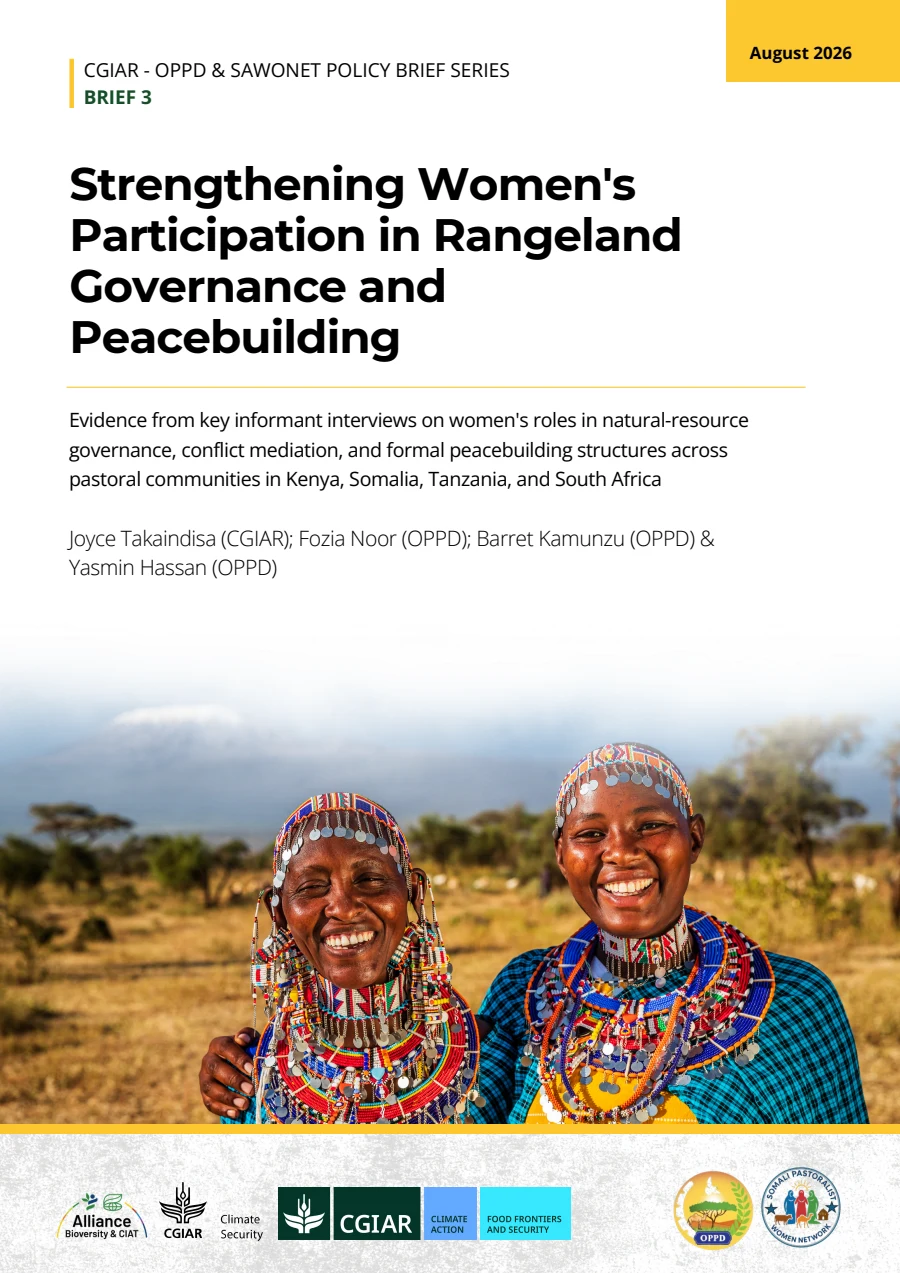
- Women contribute to adaptation and informal peacebuilding, but formal governance remains predominantly male. Disability, age, displacement, marital status and minority-clan identity compound exclusion.
Policy recommendations
- Provide direct, flexible, multi-year finance for women-led organizations, alongside community-designed early warning and anticipatory financing.
- Enforce women's land, inheritance and resource-use rights and guarantee representation with voting rights, information and budget authority in resource and peace governance.
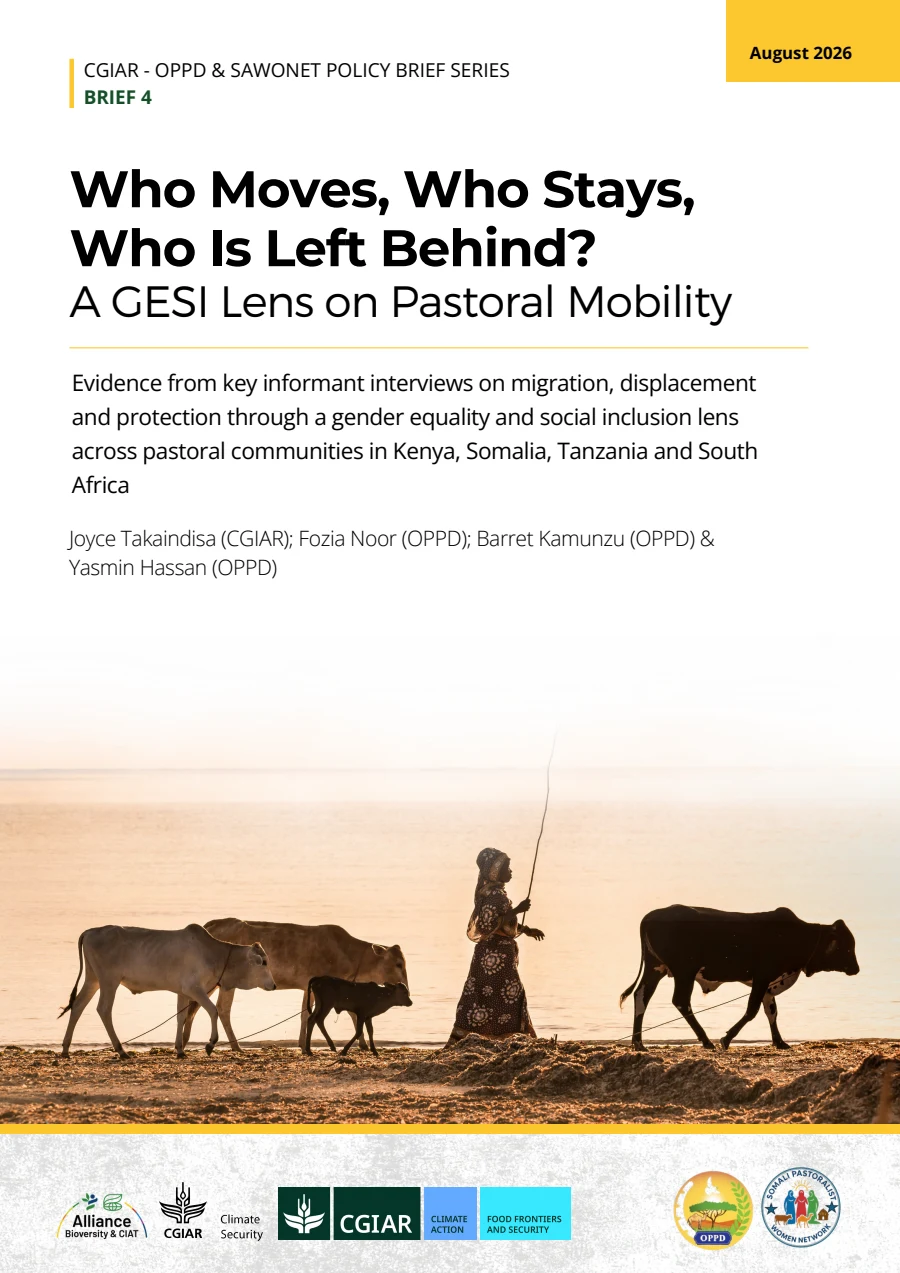
- Distinguish planned mobility from forced displacement, extend protection beyond transit, preserve customary resource rights and collect gender- and disability-disaggregated data.
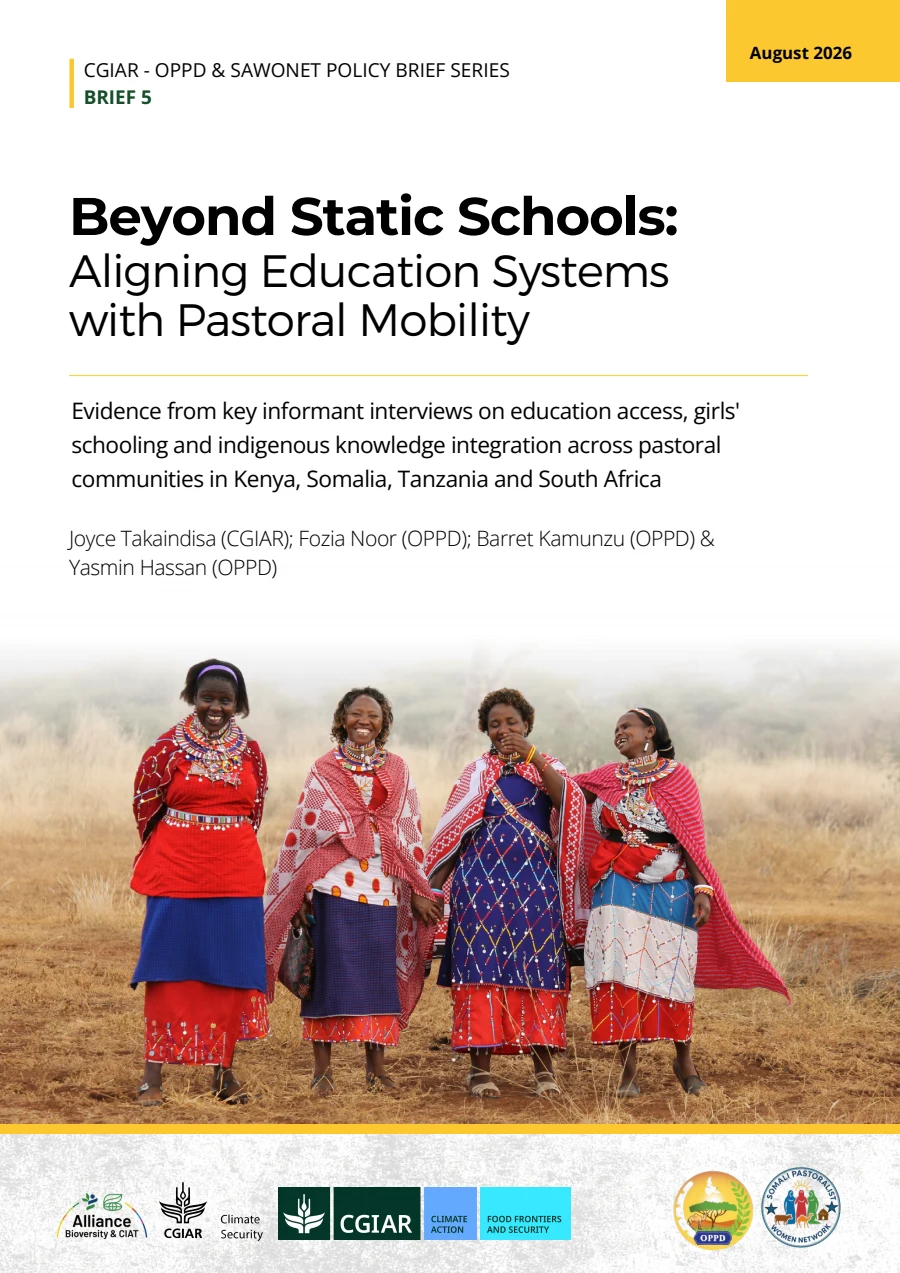
- Support livestock-centered diversification and education continuity, including mobile schools and flexible calendars.
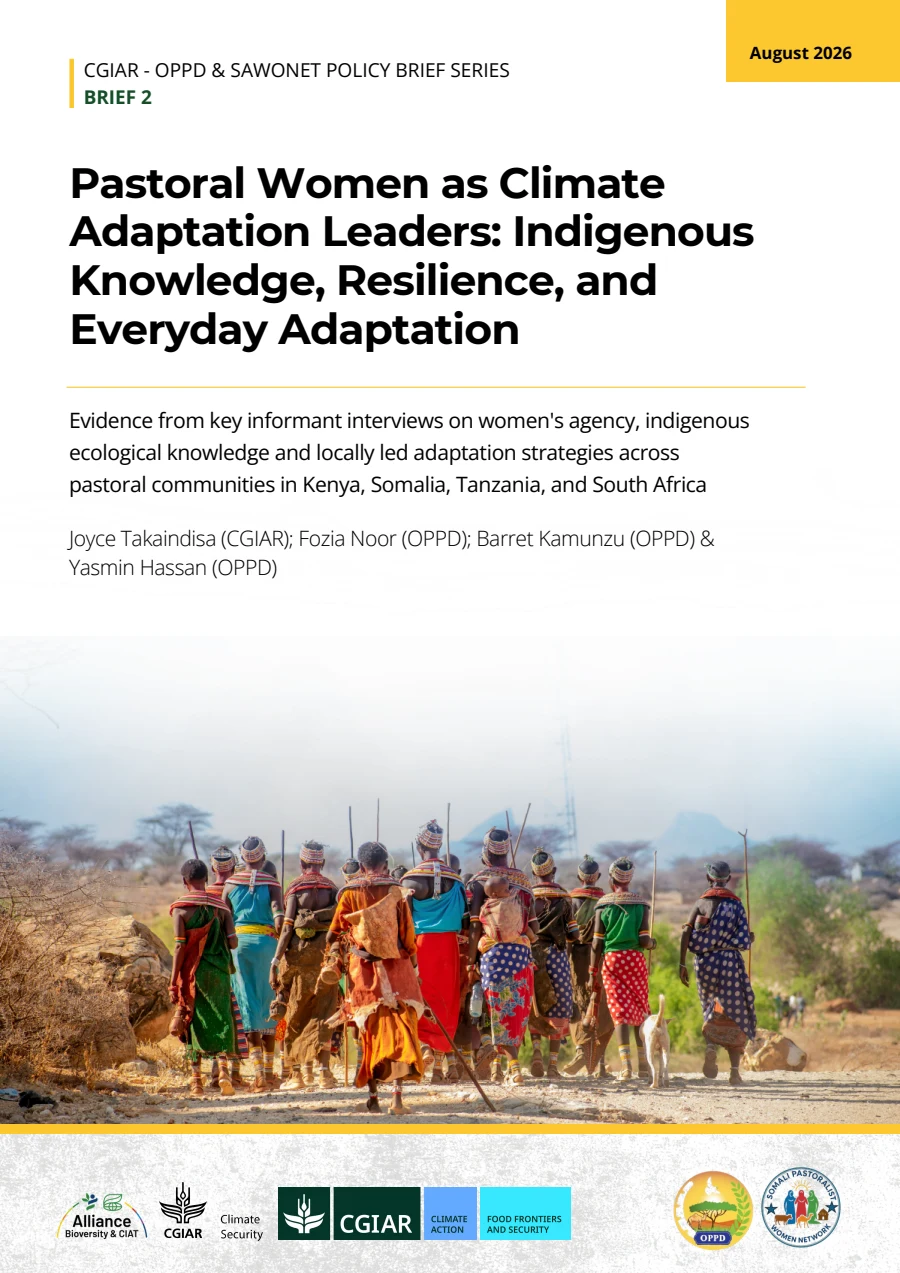
- Document and integrate women's indigenous ecological knowledge with cultural protections, and embed intersectional design and monitoring across programmes.
Citation & attribution
Takaindisa, J.; Noor, F.; Kamunzu, B.; Hassan, Y. (2026). Climate Change, Conflict, and Intersectional Vulnerability among Pastoral Women in the East and Horn of Africa: Evidence from Key Informant Interviews (KIIs) with pastoralist women-led, humanitarian, peacebuilding and policy organizations across Kenya, Somalia, Tanzania, and South Africa. CGIAR Climate Security, Organization for Pastoral Peace Development (OPPD).
Joint series: CGIAR, OPPD & SAWONET Policy Brief Series. The original citation identifies CGIAR Climate Security and Organization for Pastoral Peace Development (OPPD).
© 2026 CGIAR Climate Security. The original PDF retains all copyright notices, license statements, source citations, photo credits and institutional disclaimers.
Related publications
Explore the other available briefs in this joint series.