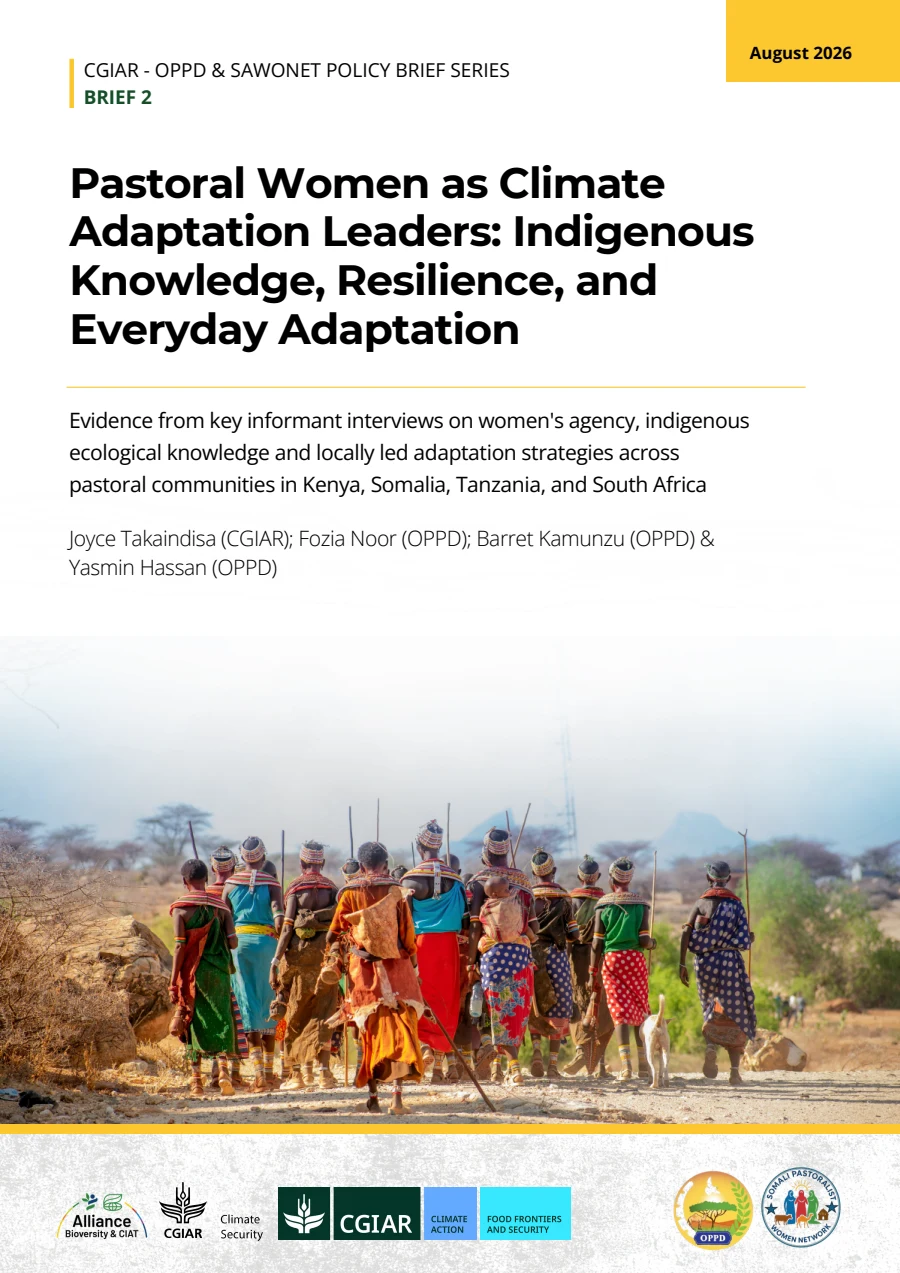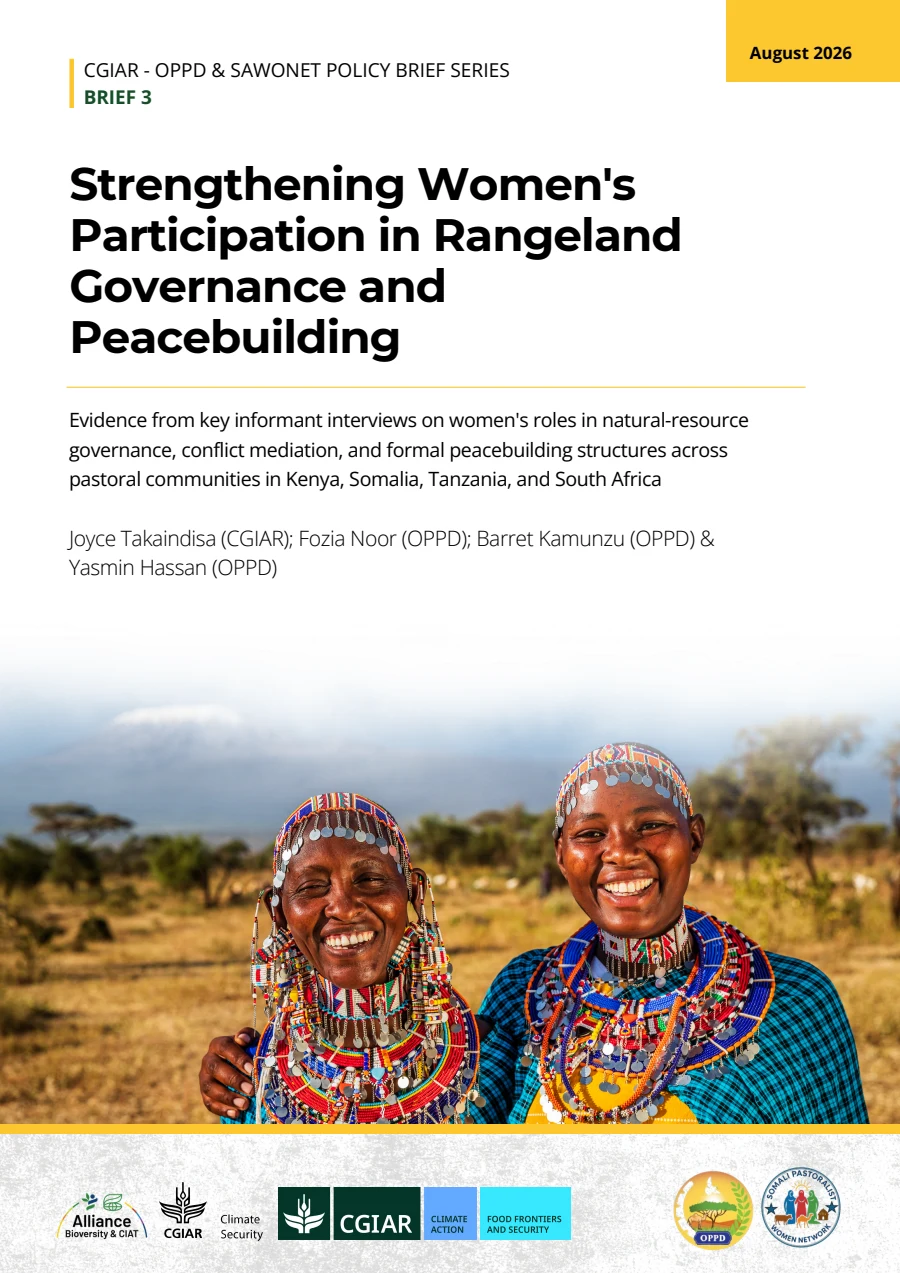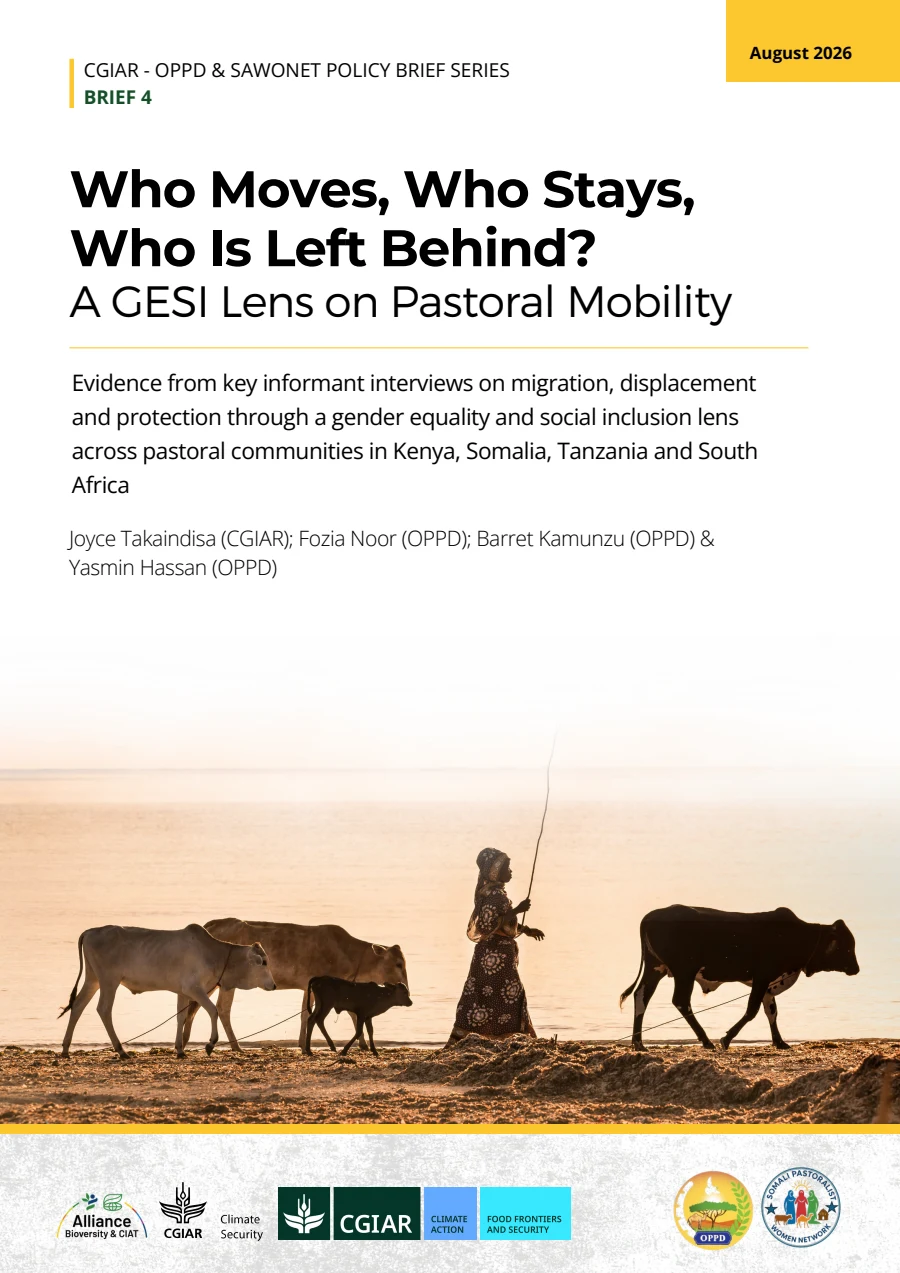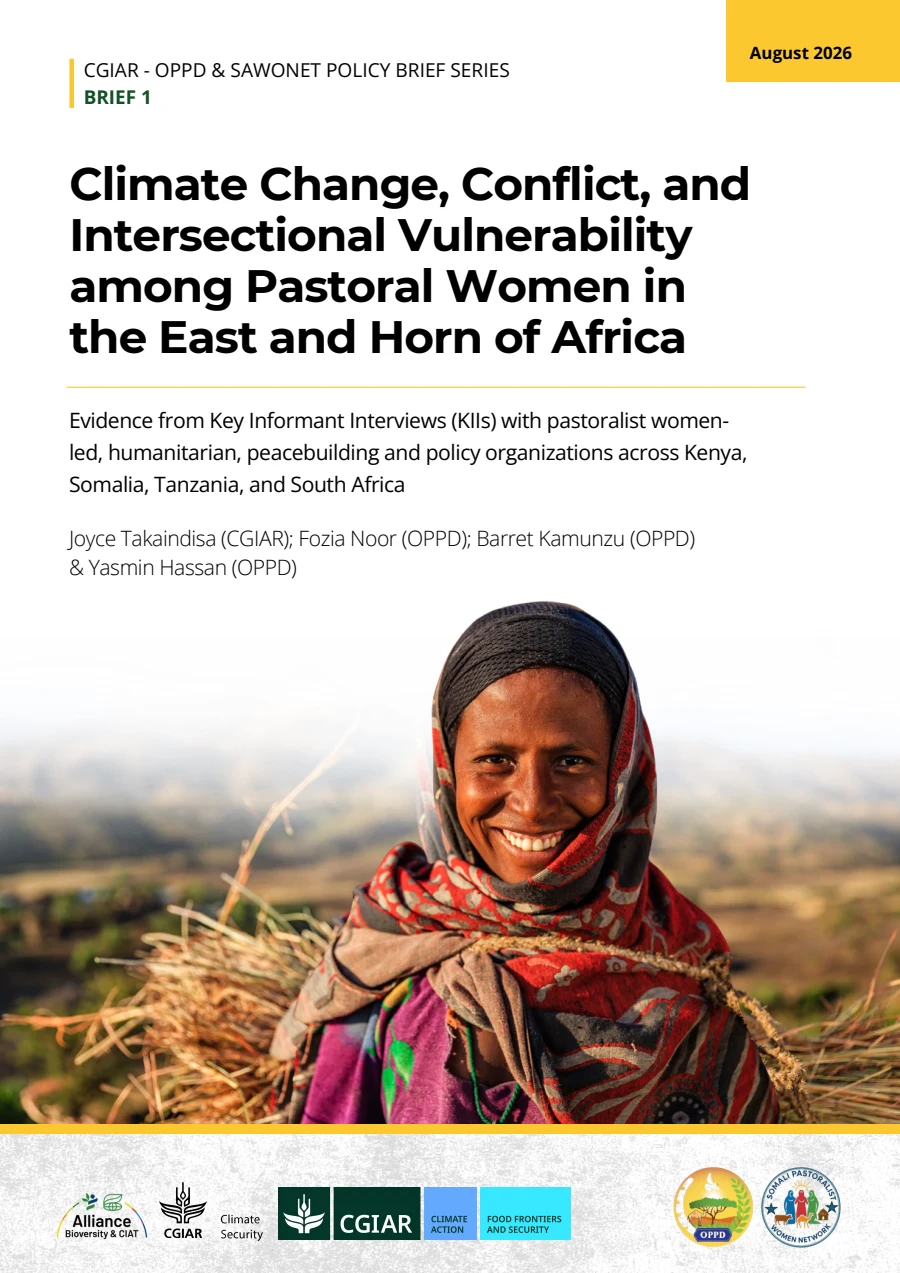
Policy Brief 5 ·
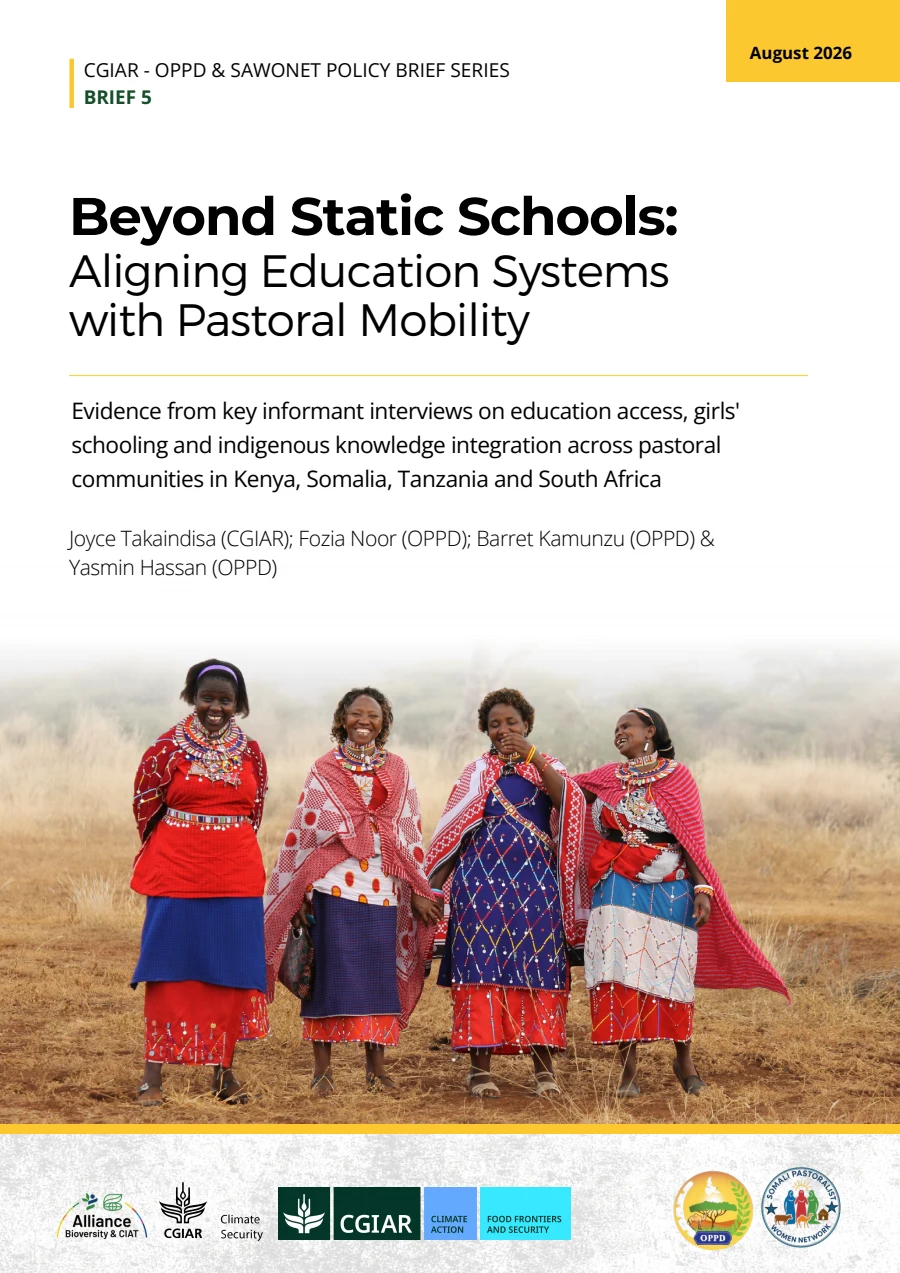
Beyond Static Schools: Aligning Education Systems with Pastoral Mobility
Evidence from key informant interviews on education access, girls' schooling and indigenous knowledge integration across pastoral communities in Kenya, Somalia, Tanzania and South Africa
- Authors
- Joyce Takaindisa (CGIAR); Fozia Noor (OPPD); Barret Kamunzu (OPPD); Yasmin Hassan (OPPD)
- Series
- CGIAR, OPPD & SAWONET Policy Brief Series
- Research countries
- Kenya, Somalia, Tanzania, South Africa
- Publication
- August 2026 · Brief 5
- Format
- PDF · 17 pages · 16.5 MB
Executive summary
Formal education systems often assume children remain in one place and follow a fixed calendar. Interviews across Kenya, Somalia, Tanzania and South Africa show how school locations, distance, seasonal movement and household labour demands limit pastoralist children's access, with additional pressures on girls. The brief argues that workable alternatives already exist, but require sustained investment, sufficient teachers and integration into education systems. It calls for mobility to be treated as a permanent design consideration and for learning to reflect pastoral livelihoods and knowledge.
Condensed from the original brief. Read the PDF for the complete evidence, analysis and references.
Key findings
- Fixed school locations, long travel distances, insecurity, rigid calendars and seasonal migration combine with household labour demands to limit enrolment and retention.
- Girls face compounding barriers from care and household work, early marriage and harmful practices; drought-related economic pressure intensifies school withdrawal.
- Mobile schools, flexible calendars, community teachers, boarding, radio and offline learning are viable alternatives, but inadequate staffing and inconsistent investment limit their reach.
- Women's ecological knowledge remains largely excluded from formal curricula, even where access to schooling improves. Learning content must also reflect pastoral livelihoods and cultural values.
Policy recommendations
- Provide sustained multi-year funding for mobile schools, flexible calendars and community-based teaching, matching models to local mobility patterns.
- Invest in teacher recruitment and retention for mobile settings, including appropriate incentives and career pathways.
- Fund community-led programmes addressing the social drivers of girls' dropout, including early marriage and harmful practices, and prioritize the severe education exclusion documented in Somalia.
- Build education-continuity safeguards into drought and humanitarian planning and connect education-risk monitoring to anticipatory action systems.
- Co-design curricula with women knowledge holders so formal education validates and builds on indigenous ecological knowledge alongside other learning approaches.
Citation & attribution
Takaindisa, J.; Noor, F.; Kamunzu, B.; Hassan, Y. (2026). Beyond Static Schools: Aligning Education Systems with Pastoral Mobility: Evidence from key informant interviews on education access, girls' schooling and indigenous knowledge integration across pastoral communities in Kenya, Somalia, Tanzania and South Africa. CGIAR Climate Security, Organization for Pastoral Peace Development (OPPD).
Joint series: CGIAR, OPPD & SAWONET Policy Brief Series. The original citation identifies CGIAR Climate Security and Organization for Pastoral Peace Development (OPPD).
© 2026 CGIAR Climate Security. The original PDF retains all copyright notices, license statements, source citations, photo credits and institutional disclaimers.
Related publications
Explore the other available briefs in this joint series.